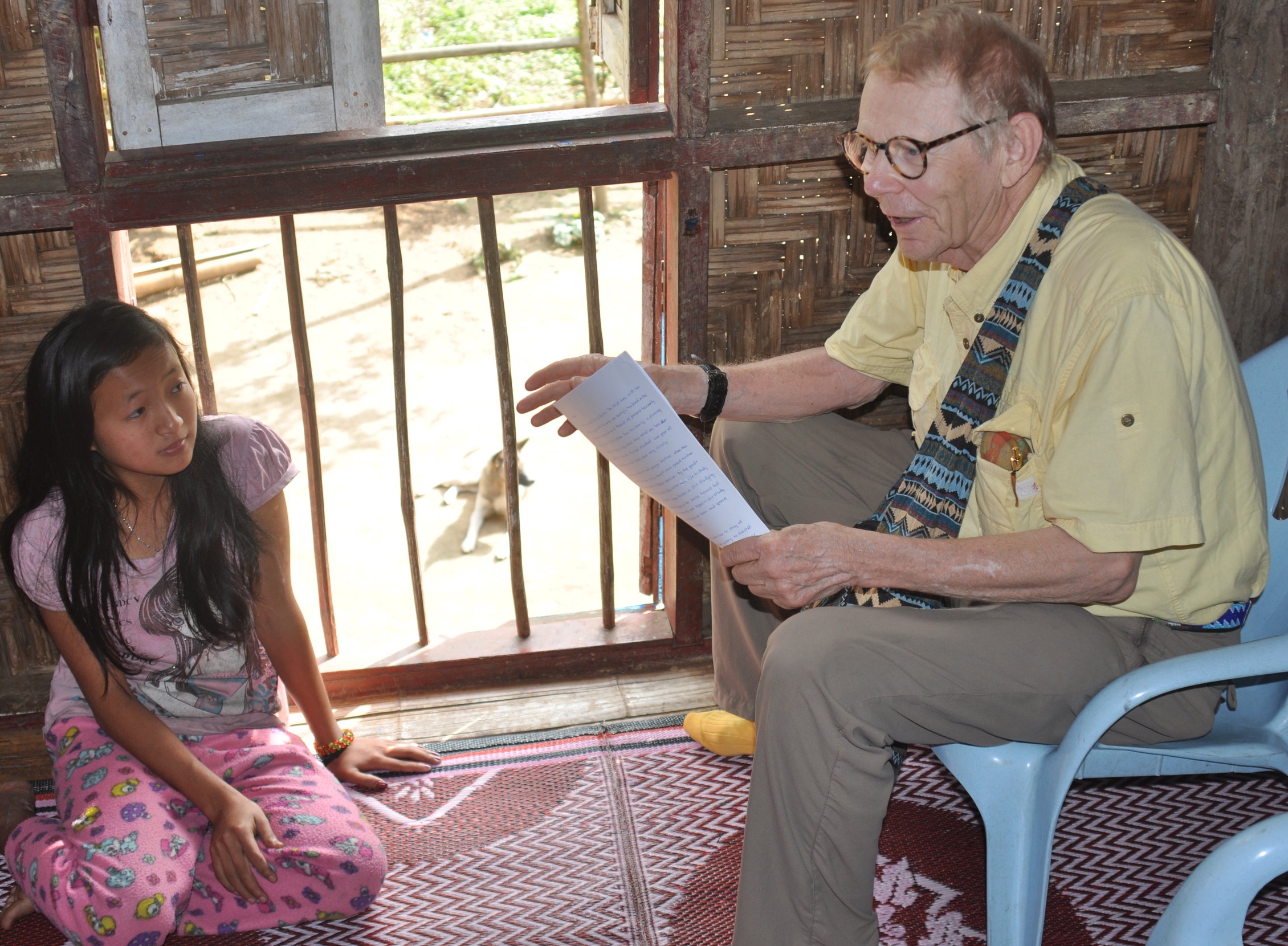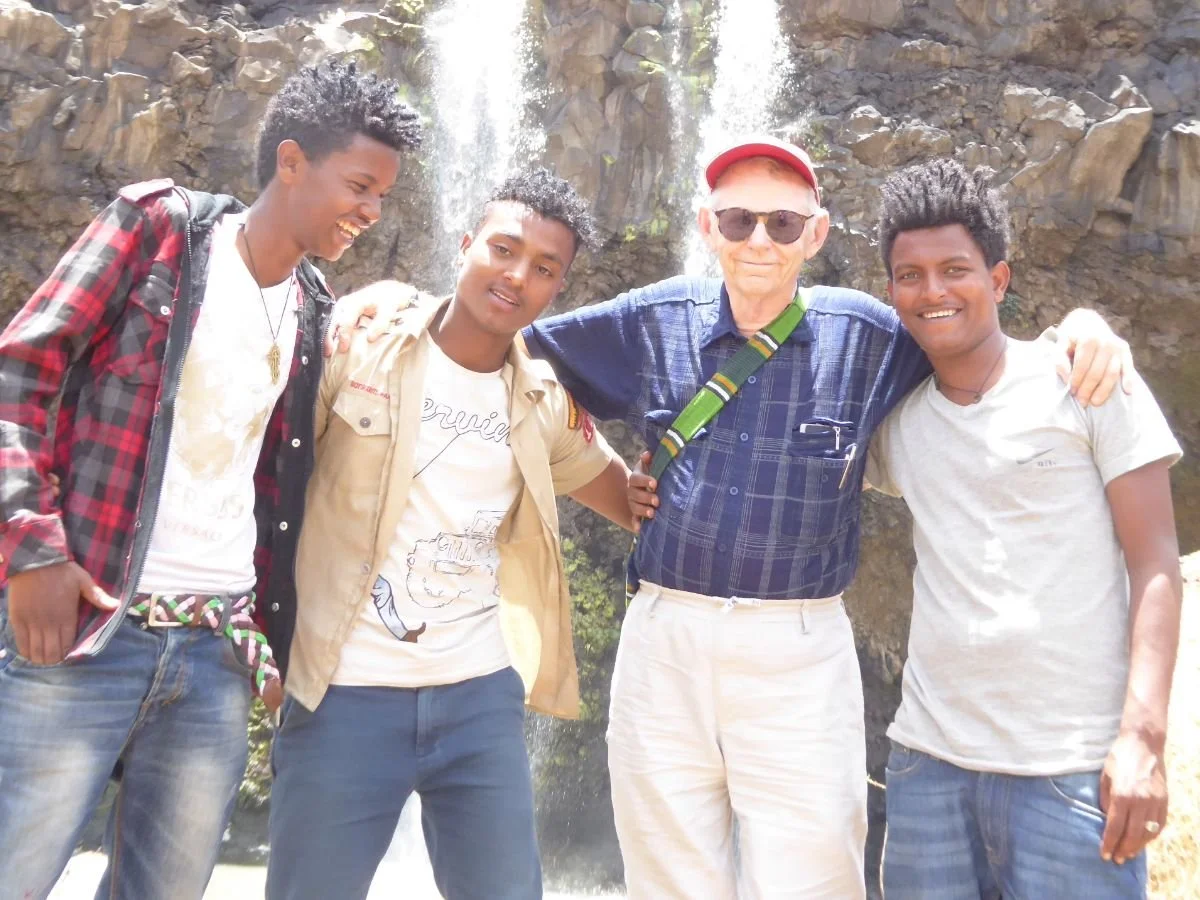
As students around the world head back to school, Bill Cook reports on school fees, the conflict in Ethiopia, and rays of hope from Equatorial Guinea, India and beyond.

As most of you know, the Bill Cook Foundation provides access to education for thousands of children across the globe. Many of our students receive their main meals of the day at their school. Unfortunately, many of these schools were forced to close because of the pandemic.
The Bill Cook Foundations is responding. We are helping to feed families, including children, parents and grandparents. The food is primarily rice, cornmeal, cooking oil, and perhaps some fresh fruit. Courageous people, including some of the children, take the food from home to home where social distancing is impossible.
In Cameroon we support students with housing and school fees who have been displaced by civil war and now live in the two large cities, Douala and Yaounde. Now, we’re also feeding them. In Kampala, Uganda, we have placed 13 boys who lived on the street in boarding schools. Now we are actively searching for housing so that they do not go back to the streets.
We know nearly everyone is stretched thin these days. But if you can, please consider a donation to the Bill Cook Foundation to support these children and their families. We will continue to feed their bodies even if our schools can’t currently feed their minds. Thank you for your continued support.

Be Tho is an orphanage in Bien Hoa, Vietnam, run by Sr. Maria Daniel Vu Thi Vinh. Thanks to your support, the Bill Cook Foundation pays school fees for about 50 of the children. The orphanage also has some older children with severe disabilities, in some cases caused by Agent Orange. These kids do not have activities designed for them, and the Sisters must take care of the little ones, prepare food and a hundred other tasks. I suggested that they hire a part time trainer to teach the boys exercises according to their abilities. The Sisters are enthusiastic, but of course a trained therapist will cost a few thousand dollars per year. I would like to find a sponsor for this ‘gift’ to the disabled children of Be Tho. This is a unique opportunity to bring direct relief to those still suffering from the aftermath of Agent Orange and the war in Vietnam.

Although we do not read much about it in our newspapers, there is a civil war in Cameroon. he Anglophone region—about 20% of the population of Cameroon— has an independence movement even while the Francophone rulers of the nation have continued to carry out acts of violence. And when that war is not flaring up, some in the Anglophone region attack recent Muslim refugees from a national disaster (About 35 years ago, about 1700 people were killed in a natural explosion). The nearby population, overwhelmingly Muslim, fled into an area of the Anglophone region near the city of Wum.
The Bill Cook Foundation funded solar panels for a school in a nearby village, but the school was shut down, citizens fled, and the solar panels have unsurprisingly disappeared. We are now supporting seven young men and women who are living in Douala, the largest city, and attending school in French. In Yaounde, the capital, there is a school containing 120 IDPs (internally displaced persons) that teaches younger children in their native English. I have visited both places and met many of the children and some of the teachers. They do good work in almost unimaginable situations. The total cost to support all of these children is $33,000 per year. We could really use sponsors for groups of 10 of the children at a cost of about $2,000 per year, and we will need commitments for several years. Please consider become a sponsor, and donating to the Bill Cook Foundation.
Dear Friends, Donors, and Board Members of the Bill Cook Foundation,
Our second full year of operation has been successful. We reached our fundraising goal of $300,000. Thank you. We have provided funding for schools, education related programs, and individual students in 23 countries on five continents plus the Caribbean. For 2018, we're raising our fundraising goal and we will add four countries to our list: 2 in Africa (Morocco and Equatorial Guinea) and two in South America (Suriname and Peru). I believe that with these additions we will more or less end our “era of expansion.” There are several programs and projects that are not continuing commitments so the number of countries we serve may actually shrink a bit even as our impact continues to grow.
Looking toward the future
I am in good health and will be traveling extensively in 2018 on behalf of the Foundation. However, I turn 75 next December and realize that my travel will be reduced in the next few years. Thus the Board has heard a report from Vice President Glenn McClure about developing a plan to make the Foundation more self sustaining. We, of course, will do this so that it remains a lean organization, ensuring that very little of the gifts go to administrative purposes. I hope a plan is put in place during this year.
Global Partnerships
In 2017, we have partnered with several foundations in order to further our goals. We granted funds to Building Minds in South Sudan, resulting in the enrollment of 600 girls in school. We have provided the Roma Education Fund with resources to help students in Croatia and Bosnia. We have a partnership with RUNAfrica, an organization created a few years ago by Harvard undergraduates to support orphans’ education in rural Uganda. We provide funds for educational purposes in cooperation with Covenant House in 3 Central American countries. We received a grant from the Rex Foundation (established by the Grateful Dead) to launch a successful building campaign of a library in rural Kenya. And we have worked with Good Steward International to provide books for schools in Kenya, and hope to work with them to get books in South Sudan. We are also exploring a partnership with Rotary International.
Expanding our donor base
We need to continue to grow our donor base, and we need to begin an endowment, largely funded, I suspect, by gifts to the Foundation from estates. This is not a type of fundraising I have experience with. However, I have scheduled meetings with people who do know how this is done. One means we want to make more use of to grow our donor base is to hold fundraisers in various venues from locally, i.e. near Geneseo, to Denver. This year we will have events in Crawfordsville, Indiana; Denver; and hopefully in Great Falls, Montana. I have made presentations to several schools in western NY and in California (San Juan Capistrano). In April, I will make a presentation in a school district in San Antonio, TX. I also have given presentations in several churches including one in South Jersey with another scheduled for North Carolina. I need your help. If you are near any of these locations, I need volunteers to host or arrange such events. It allows me to focus on the presentation and is critical to our fundraising efforts.
Efficient use of funds
We can again proudly proclaim to donors and potential donors that 99% of the money we raise goes directly to support schools, students, and programs that keep children in school. We can also announce what our gifts have done because we do not put money into big pots. Instead, we ask what is needed and send money for specific requests. Then we visit and meet the people on the ground before sending the funds. And our work doesn't stop there: we make follow-up visits to be sure it is used properly. What can our board and advisory board members and our donors do to help us to make 2018 an even better year? Of course, we rely on your generosity. Please continue to support the Bill Cook Foundation. And, please think of giving a little more. Perhaps you can honor friends on their birthdays and other holidays with a gifts in their name. We will make sure they are made aware of your generosity. Talk to people about the Foundation and send them to www.billcookfoudation.org. It will be undergoing a major update soon. Even now, there are links to a radio interview I did and to an article in a national magazine in which the Bill Cook Foundation is the cover story. Within the next two months, there will be several short videos posted, two general in nature and others about specific programs we support; these are a gift from my old college roommate Chuck Anderson, CEO of Anderson Marketing Group in San Antonio. Thank you.
Organize a fundraiser
Please consider hosting fundraiser and invite me to come. Talk to church groups or scout troops or any other group that might be willing to host a fundraiser for us. They can contact me directly, and we can arrange for me or a board member to Skype with groups considering teaming up with us.
Impact felt across the globe.
What follows is an alphabetical country by country account of where we are helping children receive a good education. Please notice not only the number of places where our dollars provide education but also the variety of ways that we do it. This is long, but I hope you will read it. Perhaps you will pick a project that you want to support and send a gift with instructions for where you want the money used. Maybe you know other people or organizations or foundations that might be interested in supporting a particular project.
BOSNIA. We work through the Roma Education Fund to provide warm clothes and boots for Roma children who live in rural areas where they must walk a long way to school. Too often parents do not let their children go when it is cold. But your gift makes it possible to travel when it's cold in the hills around the historic city of Mostar.
CAMBODIA: From the Foundation’s beginnings, we have helped graduates of Jay Pritzker Academy to attend college. This year we assisted with school expenses a student at Hamilton College. In addition, we are paying all expenses for university for four students in Cambodia, three in Phnom Penh and one in Battambang.
CAMEROON: We have just purchased solar panels for a school in a remote part of the Anglophone part of Cameroon. The village consists of 95% Muslims who are refugees from a natural disaster and 5% Christians. The two groups get along and want their children educated. There is no electricity. With solar panels, students can come to the school to do homework in the evenings. And we hope the school will soon be ready to receive computers.
CROATIA: We work through the Roma Education Fund in both urban and rural Croatia. In the city of Rijecka, we purchased four computers for an after school program for Roma children. In the area around Delnice, we have just funded an after school program for Roma kids. They live in what the Croatian government calls containers, boxes about 10’x18’. As many as ten people live in one container. Most have no electricity. School work does not get done. So we have hired a teacher for a 2-hour after school program every school day. In addition to the teacher supervising homework and giving individual help, the Foundation also provides a meal for the children.
ETHIOPIA: From the beginning of the Foundation we have funded Yohannes, Abu, and Mareg, who were living on the streets of Lalibela, shining shoes while attending school. We sent them to a vocational high school/community college to study travel and tourism. They have graduated and moved to Addis Ababa. The government makes it hard for them to start a business. So, one is studying French and one English (they are all rather fluent in English) in Addis Ababa. The third has a partial scholarship, which we are supplementing to study Chinese in Guangzhou, China.
GUATEMALA: We are working with Covenant House (Casa Alianza), which has a secure facility housing more than 60 girls and several babies. The girls are all victims of sexual trafficking. They are receiving schooling in the facility, which we help to fund; and we think we will be able to add to their music training—which is both educational and therapeutic—through coordination with the International Clarinet Society.
GUYANA: I visited the capital Georgetown a few months ago and met with a fine young man who is a member of Guyana’s national basketball team. He has started a program based around basketball to keep boys in school in a very poor neighborhood. I said we would help but that we expect the boys to police the area with the basketball court, especially since children play there too. The weekend following my visit, the work was done. Slam dunk: The court has now been completed.
HAITI: We are supporting a library in the town of Borgne on the northern coast of Haiti. It is the sole library in a town supporting several schools. Right now it has no electricity and few books. We are going to start by paying for solar panels to bring electricity to the library. This means that children can study there after dark, an important thing since many homes have no electricity. We hope to provide a variety of books in French and Creole for both children and the literate adults of Borgne. We are considering the possibility of building a school in a village where students currently walk two hours each way from their homes to schools in Borgne. This not only will improve attendance but will win support from parents who depend on their children for chores on family farms. Kids get home tired and have to work, and there is no electricity for them to study at night.
HONDURAS: We work with Casa Alianza at a shelter for homeless kids who are in danger of being trafficked or forced into drug gangs. The girls live in a secure facility where they go to school on site. However, they must leave the facility for vocational training. We provide safe transportation. We also support intake teams, which meet with homeless kids including some who live in a trash dump in Tegucigalpa. The idea is to develop relationships with these kids so that they will come to Casa Alianza when they are faced with gang membership or being trafficked. We also pay university fees of a girl named Katherine in Choluteca; she is scheduled to graduate in 2018.
INDIA: We sponsor 12 young girls (2nd grade) from the slums of Kolkata (Calcutta) to attend Loreto Sealdah School. We partner with its former principal Sister Cyril Moody, who was a colleague of Mother Teresa and has worked in India more than 60 years. Most of the girls we sponsor are Muslim and Hindu. A specific family in the US sponsors each girl and receives periodic updates about the girl they sponsor. This is a popular option for couples with young children. We also work with a school in a remote—trust me—part of West Bengal State. The school was begun by an ex-pat from England who taught and lived in India. We help pay a teacher’s salary and provide necessities for the students.
KENYA: Our biggest footprint is in Kenya. We support two brothers at the elite Starehe Boys School in Nairobi. They come from a very poor rural family, and their father is severely disabled. A Starehe alumnus, Rome Ogeto, is now studying computer science (3.9 GPA) at John Carroll University in Cleveland, and we supplement his scholarship. We fund Martha and Albert and Christine, three orphaned teens who live with a grandmother. Martha is doing quite well at university, studying international business. Albert is finishing high school while Christine is beginning study at a teacher training college in Nairobi. We have also provided much needed school furniture for St Bridgit School in Nairobi. We support three other university students in Kenya as well.
We work with Undugu Family of Hope in Kibera slum in Nairobi and its founder Edwin Nzomo. We have paid for several children to break their addiction to glue and to return to school. We have provided food and educational materials for children during school recesses. We pay high school fees for several boys and girls. We have provided several cameras for a photography program, and we are hoping to get more and better equipment and have a program that is both vocational and also generally educational. We are working with Edwin to create a Children’s Center outside Kibera as a refuge for children living in the slum.
We pay school fees for all the orphan girls at Teresa Nuzzo children’s home who qualify for high school. And we gave 30 beautiful new dresses to the girls, thanks to the generosity of Kit O’Brien.
We have paid school fees for several students to attend John Paul II Mixed Secondary School in the Nairobi slum of Kibera. This school, despite lack of many material things, is among the best in the slum as judged by state exam results. They desperately need a science lab, and that is on our agenda for 2018. Won't you consider supporting this lab?
Baraka za Ibrahim is an elementary and secondary school in the heart of Kibera slum. Founded by a former teacher in her 60s, she has hundreds of poor kids in school. They need just about everything, and we have worked to keep them going. Praxedes, the founder, also has a dorm for homeless kids and even takes in homeless adults. This school is beautiful in everything except facilities. We are working on improving those.
The School of Angels Sofia is a residential secondary school for rural children in Machakos State in Kenya. Father Chis, the founder, is tireless in improving school and begging for funds. We provide a platform where people who have met Father Chris can send funds to help. With the help of donor Vince Perez and others, we have built the school a science lab and a new classroom. The Baynes Family of East Rochester, Albany, and other places has supported many students there in honor of Michael Baynes, a social studies teacher and former Peace Corps volunteer who died tragically at age 46. The Baynes Scholars are a part of his legacy. Now Fr Chris is building a new dormitory so that more students can attend, and we are a large part of that work in progress.
Mamma Africa is two schools, an elementary school in the Mathare slum in Nairobi and a residential high school for kids from the slums of Nairobi, located in the countryside. We have been with them from the start. At the elementary school, we have provided some necessary improvements that make the school safer and healthier. In the high school, we sponsor individual students and much more. We built a science lab with a lead gift from the Rex Foundation, the charitable arm of the Grateful Dead. We provided more than 1,000 books working with the Good Steward Global Foundation. We created a 21st-century computer lab thanks to the generosity of donor Ann O’Brien. We are in the process of creating an ongoing Skype conversation between the kids at Mamma Africa and their peers at Naples High School in Western New York, facilitated after a site visit by school superintendent Matthew Frahm.
KOSOVO: We work with The Ideas Partnership (TIP) near the capital Pristina. Located in a slum on edge of town, TIP’s facility provides many kinds of support for minority children, primarily Roma and Pashtine, with many services. We help to fund the kindergarten so that the children will be able to succeed when the start public school, where most of the children come from kindergartens. We provide transport for weekend volunteers at TIP.
LAOS: We have two different activities in Laos. In Vientiane, the capital, we pay university expenses, including living expenses, for a young man to study business at a university. We also pay university costs for a Buddhist monk to study English at a university. I met these two several years ago, and they impressed me. Both are from remote villages, and their parents are subsistence sticky rice farmers. When these two young men graduate in the next two years, we have no plans to find other students there, although we do not reject that possibility. We also support 8 rural girls from an ethnic minority who live in the hills above the Mekong River and the city of Pakse. His Eminence Cardinal Ling, bishop of Pakse, began bringing girls to live in his home adjacent to a public high school. However, he had more spaces for girls than money to support them. So we filled his house for him. These girls are flourishing. Two have already graduated and are pursuing post-secondary education, and we are paying their expenses, one in Laos and one in Vietnam.
MEXICO: We are paying school fees for Kevin Fararoni, a mentally disabled 11-year-old in Nuevo Laredo. He was diagnosed as educable, but his parents cannot pay the modest school fees for special education students. Kevin is flourishing, arriving for his first day of school age 10.
MYANMAR: We have three programs in Myanmar, one just finishing and two ongoing. We provided full funding for weekend English classes for 18-22 year-olds in a village near Mandalay, working with the YMCA. There were full day classes on Saturday and Sunday for students to learn English—necessary if they want to be competitive for the most desirable jobs. All the students who started ‘graduated,’ and we hope this program will be duplicated in other villages. We have been major supporters of Dream Train, a home for distressed children (they prefer not to use the term ‘orphanage’) outside Yangon founded by Japanese philanthropists. With a generous gift from Board Member Ellen Morton, we built and stocked a library there. We sent all 183 kids on a two-day, one-night trip to the beach, something almost none of them had ever seen. And we sent Paul Hudak, a 2013 graduate of Wabash College, to spend two months at Dream Train, tutoring in English and doing a thousand other tasks. We provide a tutor for eight HIV+ children in Myitkyina, the capital of Kachin Province in the north. They get their medicine but were prohibited from enrolling in government schools. Last spring, two graduated from high school; one is now in computer school, and another is in a teacher training college. We worked with a saintly Columban sister, Mary Dillon; and in 2018 we will become acquainted with her successor.
NICARAGUA: We work with Casa Alianza to support kids rescued from trafficking and drug gangs by helping to fund their school expenses in a secure place. We have funded an English language program in the town of El Sauce because there is a desire to develop agritoruism in the region, but people will need some English skills in order to be successful.
PANAMA: We are providing a part time teacher for a girls’ home near Panama City. They attend school in the afternoon and now will have someone to provide extra help with homework and to tutor individual students in the mornings. The girls are at risk because of poverty and violence. The facility is run by the Episcopal Diocese of Panama. I have met with Bishop Julio and will continue to work with him. We hope we can attract some support for this work from Episcopal congregations in the USA.
PAPUA NEW GUINEA: One of our first projects (2015) was to collect about 1,000 books, mostly thanks to a teacher in the Rochester suburb of West Irondequoit, NY and the superintendent of the Naples School District in Western NY and send them to Bougainville Island in PNG. We transported the books to Washington, where the State Department shipped them for a small fee. Our contact there, a young diplomat, has been re-assigned. At present we have no contact in PNG and no immediate plan to look for another project there.
PHILIPPINES: We provide back packs, school supplies, a snack daily, and a small allowance for 72 children in the trash picking slum of Baseco in Manila. These children were at an age when many drop out. Our Baseco Scholar program retained 63 of the 72. The first group is finishing high school in 2018, and we promised them that we would pay university fees if they qualified. We plan to follow this whole cohort through high school and into university or vocational school.
SLOVAKIA: We pay private school expenses for two Roma children in the city of Rimavska Sobota near the Hungarian border. There is great discrimination against Roma there, as I have witnessed personally. So we pay for safe private school for a 9-year-old boy and his 5-year-old sister.
SOUTH SUDAN: In Juba, we work with Confident Children out of Conflict, an orphanage and refuge for kids founded by a heroic Ugandan woman who goes into the deepest slums and the refugee camps to find abandoned and unwanted kids. Many have physical and mental disabilities. We have supported placements into special education schools in neighboring Uganda. We have also sponsored refugee children to go to school in Juba. We provided Building Minds in South Sudan, a 501(c)(3) headed by Rochester resident and former Lost Boy Sebastian Maroundit, with funds to train female teachers and to hire a female principal so that girls would attend school in Mayen Abun in rural South Sudan. When the call for registration went out, an astounding 600 girls were signed up. Think about it. Your support helped make school possible for those girls.
UGANDA: We support school fees and other expenses for 20 of 45 orphans in the remote Raise Uganda Now (RUN) orphanage. We paid school fees for 29 poor boys who live near the orphanage and whose families are not able to pay them. These boys plus one of the RUN boys have a soccer team that they have renamed —I blushingly report—Bill FC.
VIETNAM: We currently support two oprhanages in Bien Hoa in the education of their children, and we will add a third orphanage near the infamous Cu Chi tunnels left over from the war in Vietnam. One orphanage in Bien Hoa is for mentally disabled children. The teachers asked us for educational toys, and they report that our quite modest gifts to the schools have helped them to teach certain skills to their students.
Spread the word.
One thing we need is a big media breakthrough. I am thinking of something like a Brief but Spectacular Moment segment on the PBS evening news or some sort of mention in a large circulation paper or magazine or website. I ask you to pursue any contacts you might have who can get us a big break nationally. We also need someone famous who will gain a lot of attention for the Foundation. It would be great to have a sports star or entertainer, although I would be just as happy with a famous author or public intellectual or statespesrson. If you are in contact with such a person, please guide me in how to make contact with that person.
Everyone likes our website, thanks to wonderful work and dedication by board member Charlie Cardillo. We need a lot more views. The same is true with our Facebook page. I am also ‘for sale.” Last year I gave lots of presentations at colleges and universities both about some of my academic work and about the Foundation, and I donate all fees to the Foundation. Think about contacts you have in universities and urge people there to contact me at bill@billcookfoundation.org. I have also spoken to business leaders and even a company leadership team about leadership and then always plug the Foundation. I have done such programs in both Rochester, NY and Manila in the Philippines, and that leaves a lot of possibilities not yet exploited.
We need several volunteers in Geneseo to do some routine office work. Sandy Fraser has kindly agreed to keep our books. We need one or two people who can handle a variety of matters, especially when I am away from home. Ask people you think might be willing and able. I would like someone who can monitor the Facebook page, and someone who can handle donor relations.
Let me tell you about a crazy idea I have and see if you have a contact to the people I need to talk to. Last year I was working in the slum of Mathare in Nairobi, passing out food to kids and to adults on Sunday. I like to hang out and have fun with the ‘old guys,’ who are almost all addicted to glue and are not going to live long. We speak no language in common, but we hang out anyway. This takes place on the premises of the Mamma Africa Primary School (see above). This is a school that needs lots of things including replacement of dirt with cement floors, a water tower, and a place outdoors suitable for kids in school to play and to have lunch. One of the old guys I was hanging out with had a jacket so dirty I did not notice at first that it was an NFL jacket—and a Buffalo Bills jacket! I took lots of photos. I thought that perhaps the Buffalo Bills could contribute a bit of money to do the work I described above, give every kid a Bills tee shirt, and put a Bills logo on the water tower. Then the Bills could send a couple of players to dedicate the work and to meet the kids and staff. And of course they would sent a crew to video the whole thing. This would provide a really ‘feel good’ story for the Bills for what it costs to pay one lineman for one block!
The Big Ask
This year, we have several projects that are significant in size. I am convinced that we need for several of them to have lead donors, people who are for any reason especially drawn to a specific project. I hope that you will consider becoming a lead donor for one of these big projects:
1. A continuation of our program to support HIV+ children’s education in Kachin State, city of Myitkyina, Myanmar. Two ‘graduates’ of our program are now in post-secondary education. This program costs about $5,000 per year.
2. The building of a children’s center by Undugu Family of Hope for children from the Kibera slum in Nairobi. The organization has land outside Nairobi and wants to build a facility that will hold about 70 children for extended experiences away from the slum. The total cost is about $100,000. It will be built in stages, but we need probably $20,000 to start. The premises of Undugu Family in Kibera were looted during post-election violence, and it is important that there is a safe place for Undugu Family’s kids. This is especially true when school is not in session, as there are few positive activities in Kibera.
3. Undugu Family wants to set up a photography program for children in Kibera. We have already donated 4 point and shoot cameras. However, we need more and better equipment including printers. We need books. We have a US volunteer who is committed to spend time setting up the program and doing some instruction. A few of our donors know Ken Burns. Might he be interested in helping? We want students to learn both filmmaking and also how to do professional photography for weddings, etc. And we want kids to learn to look at their world better by photographing it. If any of you knows camera buffs or people in photography clubs, please ask them to consider helping us.
4. Baraka Za Ibrahim and John Paul II schools in Kibera are in desperate need of lab equipment for science education. In the two schools combined, I saw one microscope. There already are buildings in both schools that can be adapted to be labs. We need about $10,000 for each lab.
5. We have told Fr Chris and Fr David that their schools in rural Kenya will receive help in expanding the schools by building dorms for boys (one school is now 90% girls). We have promised $10,000 for each project. Naming rights are available.
6. We now have ‘our own’ soccer team in Uganda, Bill FC. We have promised to send 29 boys to school who are currently not in school because of their families’ inability to pay school fees. We also hope to get them uniforms and shoes since they have neither. The cost of schools fees and soccer stuff together is about $6000.
7. We are working with RUN (Raise Uganda Now), an orphanage in the eastern part of that country. Thanks to our help in 2018, the number of children living there has gone from 25 to 45 since we agreed to pay the new arrivals’ school fees. Now, the director plans to move to a new facility. The land will be purchased soon, and the costs of building will be around $30,000. RUN has support from an organization of Harvard undergraduates, and we hope that the Bill Cook Foundation will be able to supply a good chunk of the needed money. The new facility is in a larger town with better elementary schools; and, unlike their present location, it has a high school.
8. We have agreed to help Happy Hands, the only school for deaf children in the tiny African nation of Equatorial Guinea. The founder, a SUNY Geneseo alumna, has lost major sponsorship when an oil company decided to pull out of the country. The school has a good physical plant, but there is little support for other expenses. We need to provide better food because for many of the children, that meal is their only real meal. We want to expand the school by adding more teachers. The bus broke down three times on the same day, which happened to be my first day to visit the school. If you have been touched in your life by the presence of deaf people, how about making a significant gift in their honor or memory? There is also the possibility of naming rights for rooms in the school.
9. We are helping Confident Children out of Conflict in Juba, South Sudan to do extraordinary things with abandoned and orphaned kids in that war-torn nation. For some we pay school fees. Those with disabilities that keep them from school, we have committed funds to get them treatment and to get them in appropriate schools, mostly in neighboring Uganda. This is expensive. We would like to send CCC a check for $10,000 in the next few months.
10. For $4000 you can sponsor a boys’ basketball team made up of high risk boys in Georgetown, Guyana. The team is the idea of a member of Guyana’s national team, and we need to create a good place to practice plus construction of a simple building where homework can be supervised and extra classes can be held. We can do all of this for about $8000.
11. We would like to send at least $5000 to Casa Alianza in Tegucigalpa, Honduras. This organization rescues trafficked girls and sends them with our help to vocational training. Boys endangered of being conscripted into gangs are provided a safe place to live and schooling and vocational training. There is such desperation in Honduras that thousands of kids are trying to get to the US. We want to rescue them from danger and safely educate them for jobs in their native land.
And these are just some of our goals for 2018. Please consider being a lead donor for one or more of these good things. If we could raise $400,000 in 2018, that would make our 4-year total of one million dollars! Let’s do it!
All of the Bill Cook Foundation’s stakeholders, board members, donors, organizers of fundraisers, et al. should be proud of what we have accomplished. We are not just another foundation. First, we do not start programs but find schools and programs that exist that need support and expansion. We trust the people on the ground and thus do not need to hire people on site. Before we send a dime, I visit each site and get to know the folks in charge. Thus I know who will receive the funds we send. I return to each site after a year to assure that the money has been used as promised and that it has made a difference. We fund plans and not ideas, and we try to transform good ideas into plans before committing funds. We are impatient. If we wait to act, the kids on the edge will drop out of school, probably never to return. So we act quickly to save at risk kids as well as plan for the next generation of students.
Thanks for all you have done. Now, I respectfully ask you to do more for the kids served by the Bill Cook Foundation.
Bill Cook
President
PS: Last year, donor Ann O’Brien and her sister Kit accompanied me to Kenya for a few days to see our money at work and to meet the kids and the heroes on the ground who teach and supervise those kids. If you have a desire to visit some of our projects, please contact me. Kenya is a particularly good place because we have a lot of projects in and around Nairobi and also a good and safe place to stay. But I would be happy to have folks with me at some of our other sites too.
I am often asked how many people the Bill Cook Foundation employs to meet the needs of hundreds of students in over 20 countries. To everyone’s surprise, the answer is zero. I now understand just how differently we do business than most other Foundations. Before we decide to support a school or education-related project, we look at proposals; and I visit the people on the ground. And we do not tell them ways we can help. We ask them what they need. We are convinced that the people closest to the need generally know best. When we send funds, we ask for receipts and other appropriate evidence, and then within a year I visit to see the benefits that have resulted from your generosity and commitment.
Apparently it is unusual and even revolutionary that we assume that our grantees know more than we do and are better able to administer gifts, adhering to our guidelines. I say, long live the revolution!
It is also unusual that we do not put money into big pots. When we were asked to contribute to a large charity doing good work, I said no. Instead, I asked for proposals to fund specific needs so that you can follow your gifts and see that they did real and measureable good. Instead of sending some money to a wonderful organization, the Roma Education Fund, we bought 4 computers for an after- school program for Roma kids in Rijecka, Croatia and warm clothes and boots for Roma kids near Mostar, Bosnia. The former gift allows Roma kids to have the same opportunities as other kids in the city. We were told that Roma parents didn’t want to send their kids to school in the winter in Bosnia because they had to walk a long way and did not have proper clothes. We believed the people working with the Roma Education Fund, and we agreed to do the highest priority on their wish list. Apparently this too is unusual because so many charities tell the people working on the ground what they need rather than listening first.
We wanted to help a school for kids in the Baseco slum of Manila; people pick through trash to survive there. Father Dante suggested that we provide backpacks, pens, pencils, notebooks, a daily snack, and a small monthly allowance to kids at an age when many drop out. Well, 63 of the 72 Baseco Scholars are back this year, a number that surprised even the good Father Dante.
Of course we are different in a third way. More than 99 cents of each dollar donated goes directly to fund projects that aid students and schools. All of the work of the Foundation is donated time, and our main annual expense is the cost of wire transfers. When we hear of foundations that spend 40% in administrative costs, we ask why people want to support them when they get more bang for their bucks (turned into Myanmar kyat, Vietnam dong, Honduran lampiras, Ethiopian birr, and many other currencies) with the Bill Cook Foundation.
Please tell your friends and any organizations you belong to about the benefits donating to the Bill Cook Foundation. Perhaps you can twist a few arms or urge churches or social organizations to contact us at bill@billcookfoundation.org. Sent them to our website. You might want to let Uncle Fred and Aunt Alma know that you would rather have a donation to the Bill Cook Foundation for Christmas than a new tie or necklace.
With your help, we can raise $125,000 in December. But only you are the primary voice of the Foundation. In the next few weeks, I will post a series of stories about some of the heroic folks on the ground that we trust. Stay tuned.

Almost all of these Baseco Scholars in Manila have returned to school, thanks in large part to the Bill Cook Foundation's investment in their future.
The Bill Cook Foundation has, in less than 2 ½ years, has raised almost a half a million dollars. As of August 27, we are $46,000 short of that milestone. August and September are difficult months for us because we are sending lots of dollars to Asia, Africa, Eastern Europe, and Central America since the school year is beginning in many places. August is not known as a good fundraising month because people are on vacation and/or buying school supplies for little ones or sending big checks to colleges for our bigger kids.
Our current expenses include tuition for some girls in Laos whom we supported while they were in high school, and now we are paying more expensive university costs. We just completed our pledge to construct a library for a school for children from Nairobi’s slums, and we paid for $4000 for books to stock it and two other school libraries. We bought 4 computers for an after school program for Roma students in Rijeka, Croatia, so those children will have the opportunity to learn basic computer skills. We are about to send $6000 for programs administered by Casa Alianza in Guatemala, Nicaragua, and Honduras that benefit homeless kids and girls who were victims of human trafficking.
If we can hit the $500,000 mark by October 1, we will be “re-stocked” so that we can continue to support children in India, where the school year begins in January. We also need to keep our pledge to house, feed, and educate 20 orphans in rural Uganda and to continue our commitment to HIV+ children in Myitkyina (Kachin State), Myanmar.
So please consider making a gift to the Bill Cook Foundation now. Enabling a girl in rural South Sudan to attend elementary school or an orphan in Vietnam to attend high school is an act of love and justice. Please let us know if you wish us to direct your gift to a certain place, for we will be happy to keep you connected in some way to the children you choose to help.
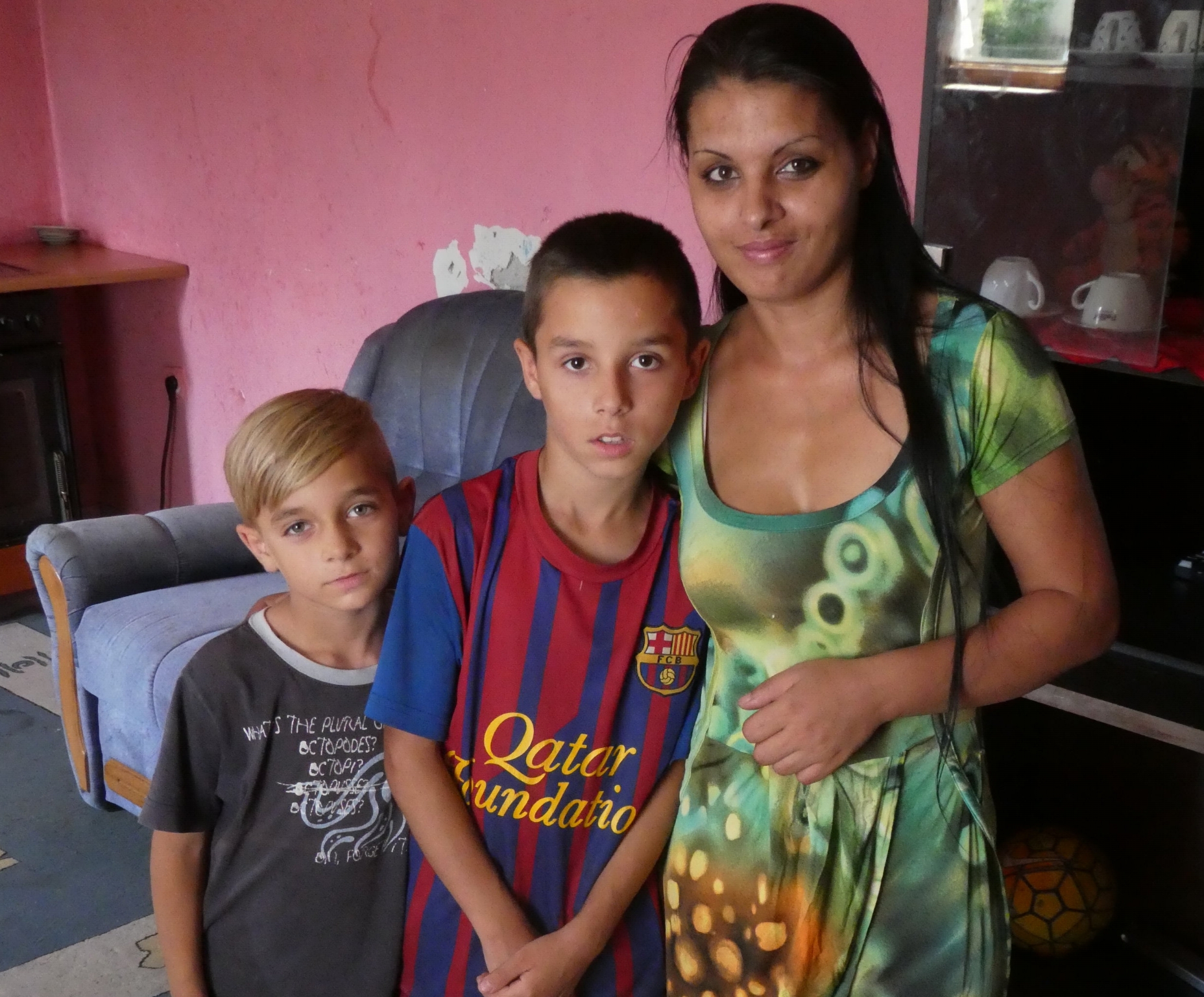
Being president of the Bill Cook Foundation is the greatest job in the world. I get to visit schools and teachers and students and watch miracles taking place. Often I see facilities in great need of improvement, but I always see eager children anxious to learn and parents and guardians who deeply desire a good education for their children.
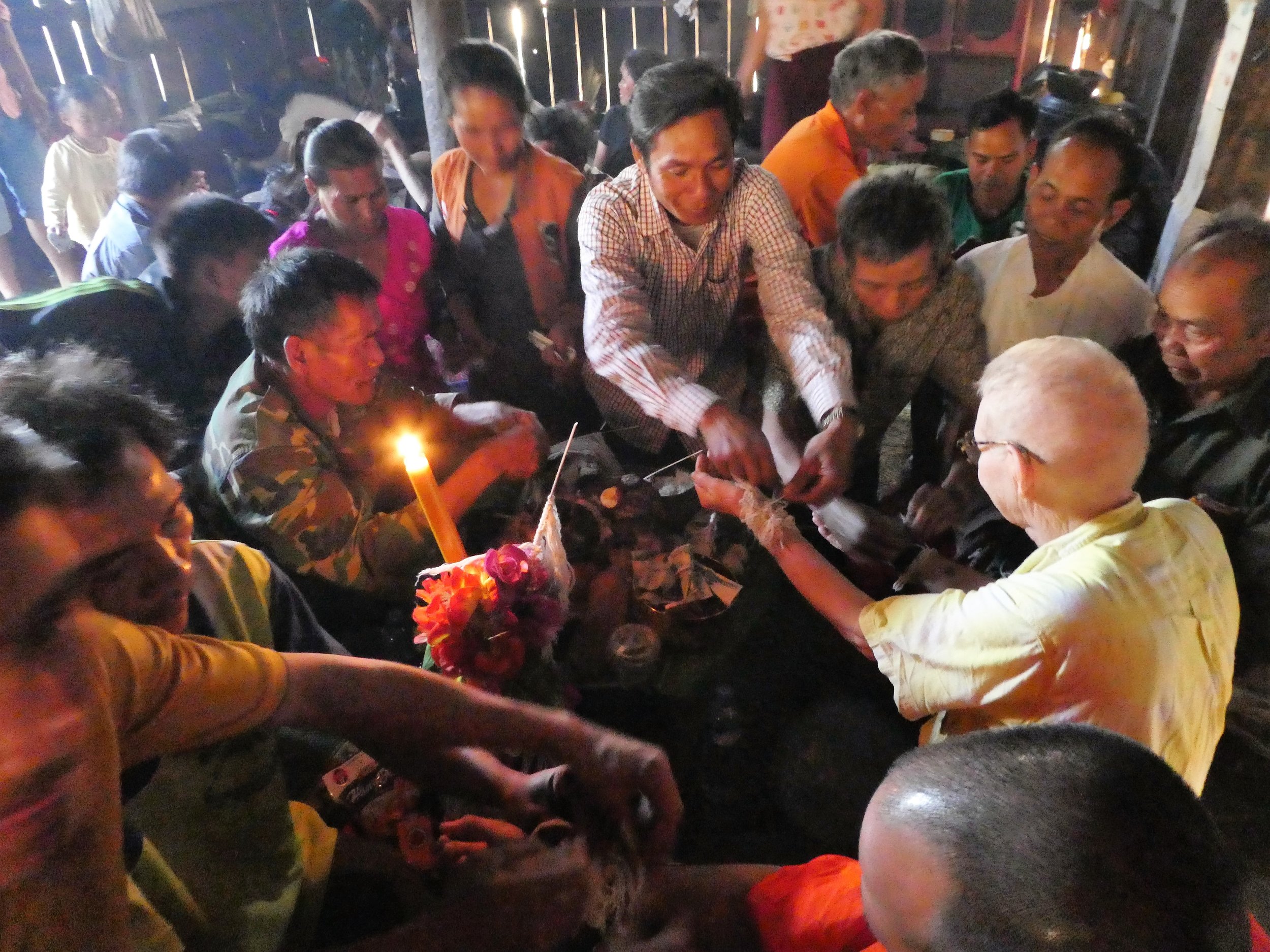
Most of our work involves elementary and high school students, as well as some special education students. However, we also support several young men and women to attend universities in Laos, Cambodia, and Honduras. A few weeks ago, one of our Lao students—a Buddhist monk—invited me to his remote village in the north for a ceremony to honor me as a kind of patron of the family. So, Monk Sone and I flew into a tiny airport and then were driven about 4 hours, the last hour of which was a deeply rutted dirt road.
The house where Sone’s family lives has electricity, and I asked how long this had been the case. The answer is since last year. The family’s two-story house has no furniture and a simple wooden floor. I was warmly welcomed by Sone’s family and was immediately served one of many meals featuring sticky rice—since that is the crop of the area.
I was awakened the next morning by a loud squeal, which turned out to be the last sound of the pig that would be the main course of that evening's Baci Ceremony. The Baci Ceremony is celebrated on big occasions. At least a quarter of the village’s 400 residents came at least for a while. The crowd gathered, and I sat on the floor with Sone on one side and his father on the other. Soon, the roasted pig’s head and other items were placed in front of me. The heart of the ceremony is when everyone ties a white string on each of my wrists. This took quite a long time. Then, I had the honor of taking the first bites from the pig's head—snout, ear, tongue, and cheek.
I greeted everyone and was invited to drink a local alcoholic beverage out of a long curved straw. I can only say that it was potent! There was music, most of it was western, and the celebration lasted until well past midnight.
Sone has not yet decided if he will remain a monk. Many young men in Laos spend some weeks, months, or years as monks. In part this is because it gives them opportunities to go to school. If he remains a monk, he will be a teacher. Since he is majoring in economics at a university in Vientiane, the capital of Laos, he may choose to enter the world of business. Either way, he will participate in the making of a better Laos. The nation has a sclerotic Communist dictatorship and a weak economy. The United States, in a secret war, dropped more bombs on Laos during the Vietnam War than were dropped in all of World War II, and we have still not removed much of the unexploded ordinance. One of the people in Sone’s village said he could show me a bomb on a nearby farm, but I too ashamed to go with him. After all, it has been 50 years since we bombed Laos.
We need lots of young people like Sone in the developing world to be part of the establishment of just societies that respect human rights. This is true not only in Laos but with our three students in Phnom Penh and Siem Reap, Cambodia and our about-to-graduate Katharine in Cholutica, Honduras.
The honor I received at the home of Monk Sone is really an honor for all of the donors to the Bill Cook Foundation. Because of you, we are making a difference in 16 countries from Papua New Guinea to Myanmar to South Sudan to Kosovo to Nicaragua. I hope you will remain part of our team or join our team to provide education for some of the world’s poorest children



Recently, I visited The Ideas Partnership (TIP), a non-profit that works with very poor children in Fushe Kosove, a town adjacent to Kosovo’s capital city, Prishtina. Located in an area where trash picking is the primary means of livelihood for most families, TIP provides vital services to children and their families, including a kindergarten, enrichment and educational programs, and support for children enrolling in the public schools. The families here are members of minority groups in Kosovo who face much isolation and discrimination. While Roma are the best known, Fushe Kosove also has Pashtines and Egyptians who migrated here when this was part of the Ottoman Empire. People are not sure exactly where these last two groups originated despite the latter’s name. TIP does wonderful work, and the Bill Cook Foundation plans to help them. It is difficult and costly to enroll students in public high schools because of complex rules and even quota systems. But, our contribution to The Ideas Partnership will assure these students have access to a high school education. We need your help. Now is a great time to make a gift because we distributed quite a bit of money at the beginning of the school year and need to replenish our funds for projects in Central America, India, Myanmar, and Vietnam as well as Kosovo. You can send a check, made out to the Bill Cook Foundation, to Bill Cook Foundation, 3 Oak Street, Geneseo, NY 14454. Or, you can give by credit card by going online to www.billcookfoundation.org. We are a 501(c)(3), so all contributions are tax deductible. Thank you.