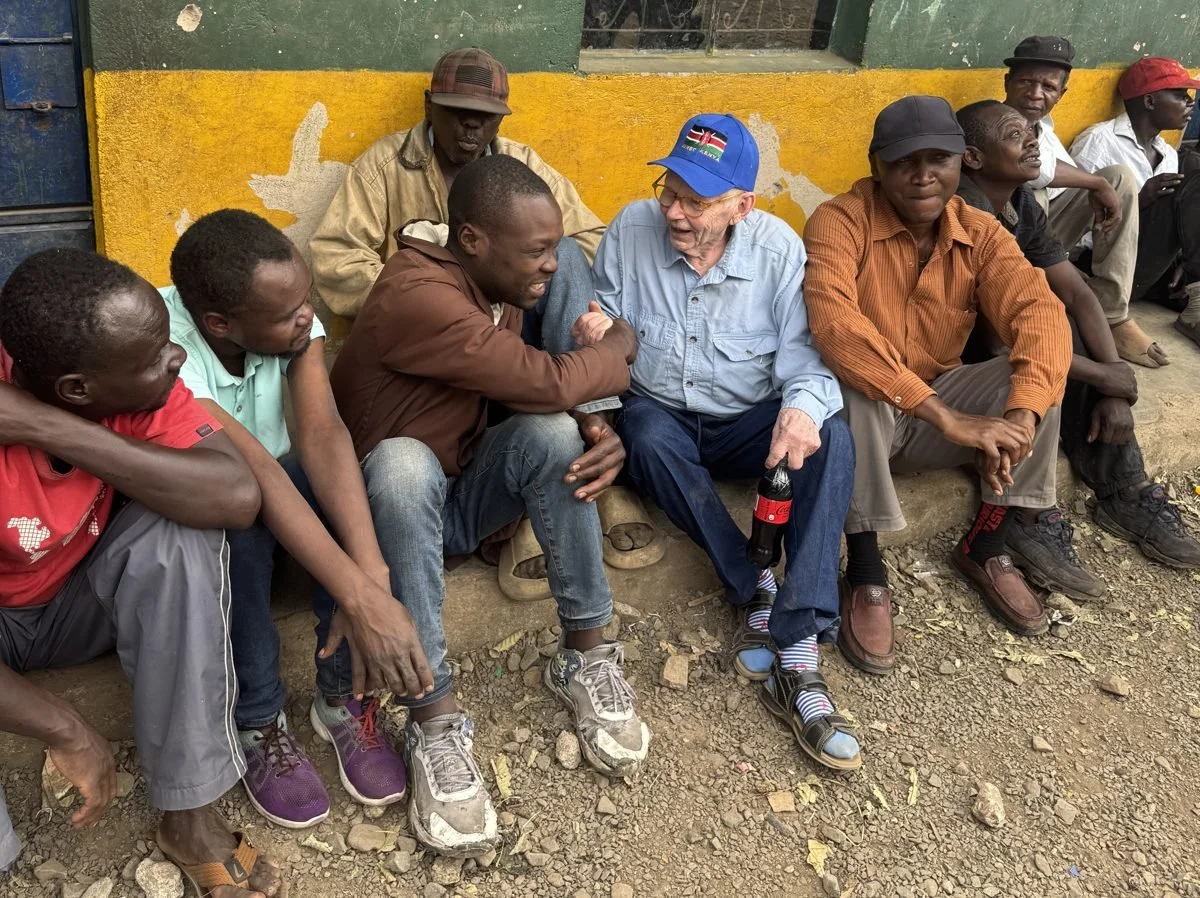
Bill among the men at the Sunday feeding program in Mathare, sitting down, as he puts it, to see the world through their eyes.
From Sympathy to Empathy
A report from the field by Charlie Cardillo, Board Member, Bill Cook Foundation
Nairobi, Kenya. Bill Cook has spent a lifetime studying St. Francis. This August, he was invited to address hundreds of Franciscans gathered for the St. Francis Jubilee Symposium in Nairobi, where he spoke about a distinction at the heart of that study. That is, the difference between sympathy and empathy. Anyone can feel sorry for a child begging in the street. That’s sympathy, and it’s not difficult. Empathy is harder. It means sitting down beside that person, seeing the world through their eyes, and then doing something about it. That distinction is the whole reason this Foundation works the way it does. In person, alongside the people who live inside these communities.
A week on the ground
This August, I traveled to Nairobi with Bill to spend a week with the Foundation’s Kenya partners. Walking the schools, sharing the Sunday meal, and sitting with the people whose lives this work has changed. Kenya remains the Foundation’s largest concentration of work anywhere in the world. Here’s what I saw.
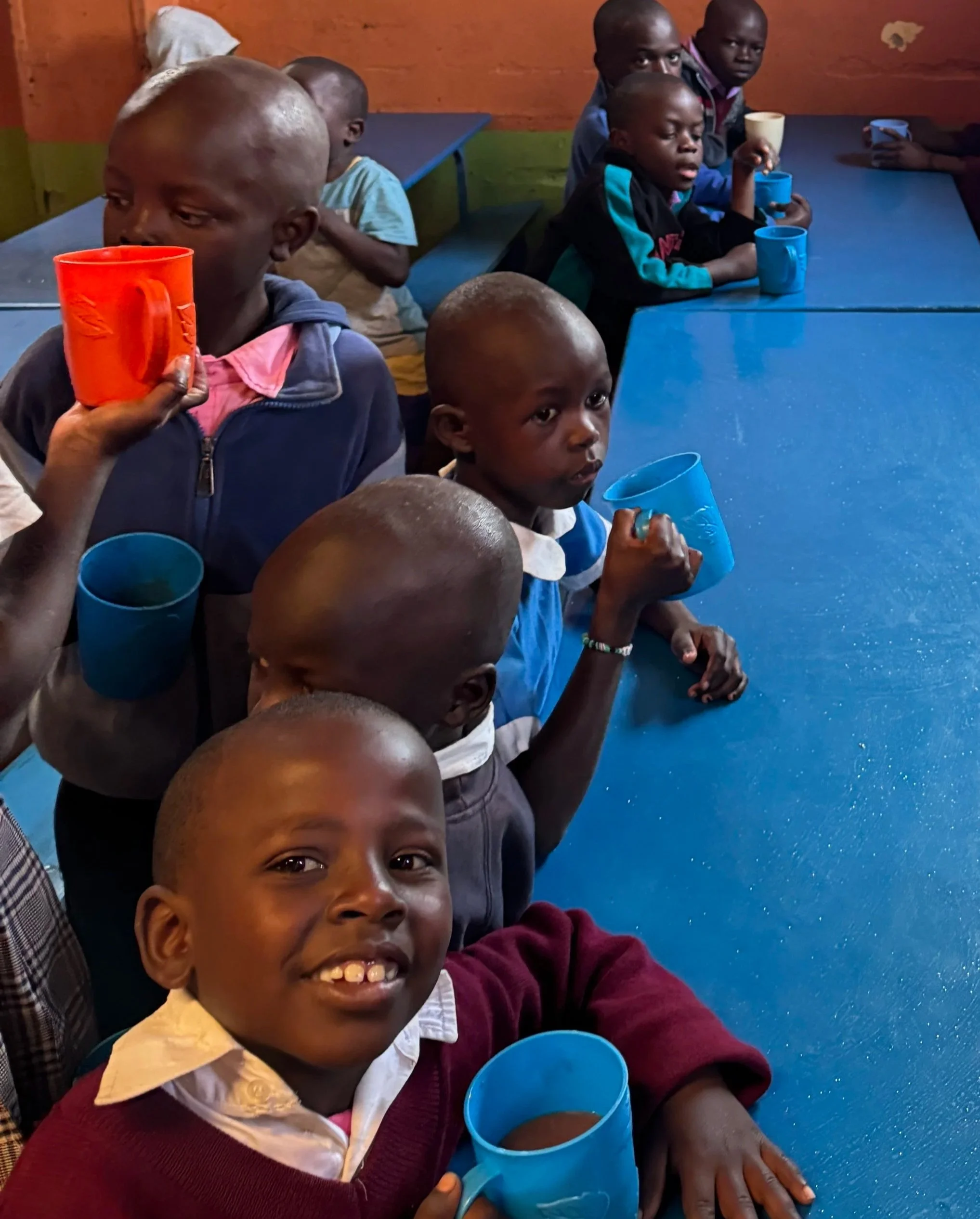
For many of these children at Baraka Za Ibrahim, the meal they receive at school is the one they can count on each day. Thank you for making it possible.
On Sunday, I watched Bill—at 82 years old—lower himself onto the ground in the middle of the feeding program to sit shoulder to shoulder with men most of the world walks past. About two hundred people were served a hot meal that day, as they are every Sunday. That is the clearest kind of sympathy — a meal. And at Mamma Africa it is only the front door. Behind it is a school, and the harder, longer work of empathy.
I met the teachers who do that harder work. At Mamma Africa and at Baraka Za Ibrahim, I found people who show up every day, for very little, in classrooms with hand-lettered charts papering the walls, and pour everything they have into supporting children the world overlooked. Keeping good teachers in those rooms is the hardest thing these schools do, and the most important. It is the difference between a child who has a future and one who doesn’t.
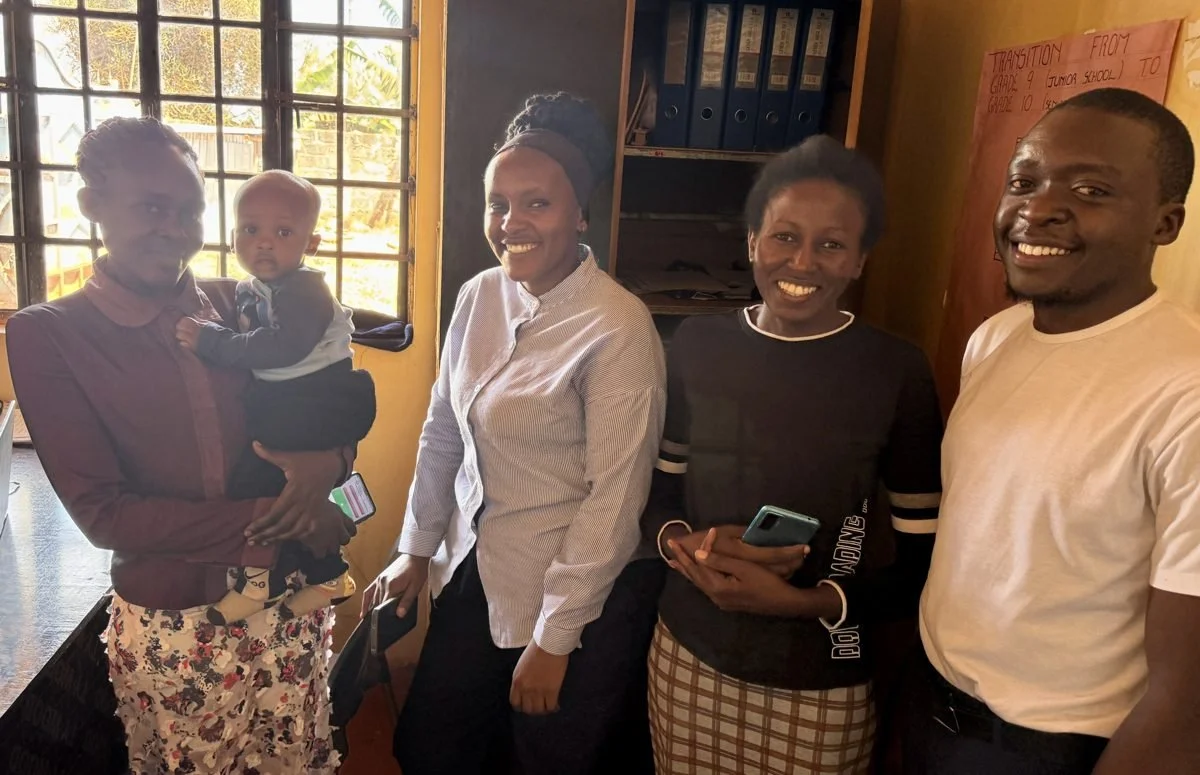
Teachers at Mamma Africa Secondary School. Keeping good teachers in the classroom is the school’s hardest, most important need. Your support is the difference.
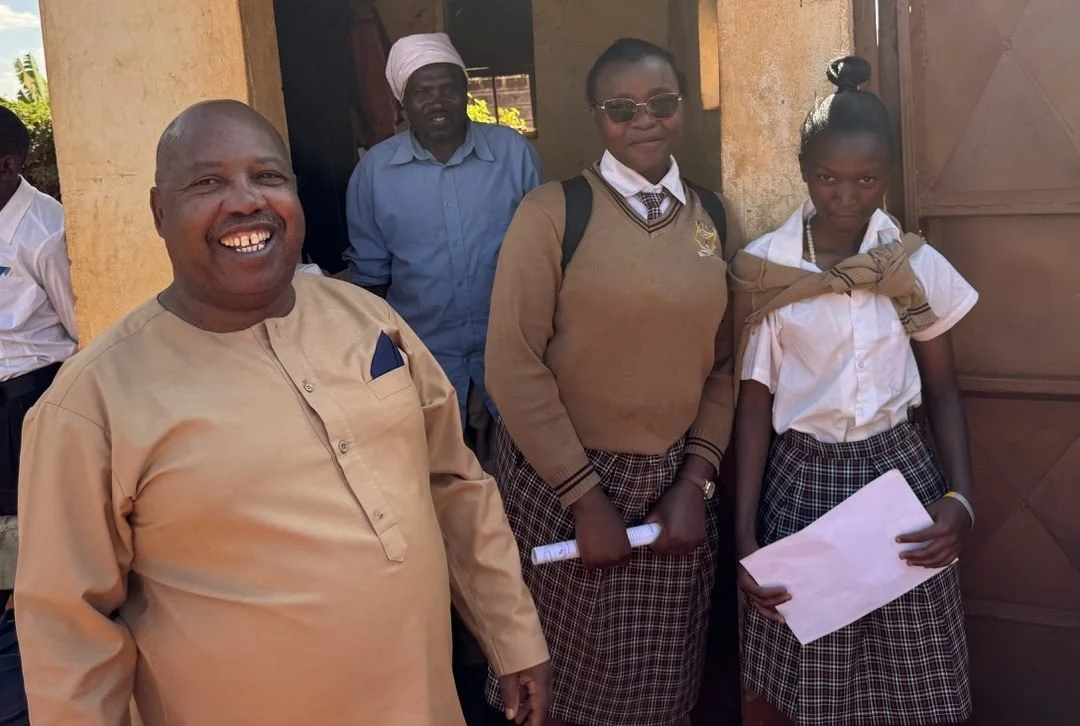
The tireless and inspiring Father David, with students at Mamma Africa Secondary School.
I met the students, too. Students like Julius, whom Bill first found on the street at fourteen and who is now a certified auto mechanic. I sat with children who, by every statistic, shouldn’t have a chance, who were smiling, raising their hands, holding up their notebooks. Inspiring is a word we’ve used in these newsletters for years. Up close, it stops being a word.
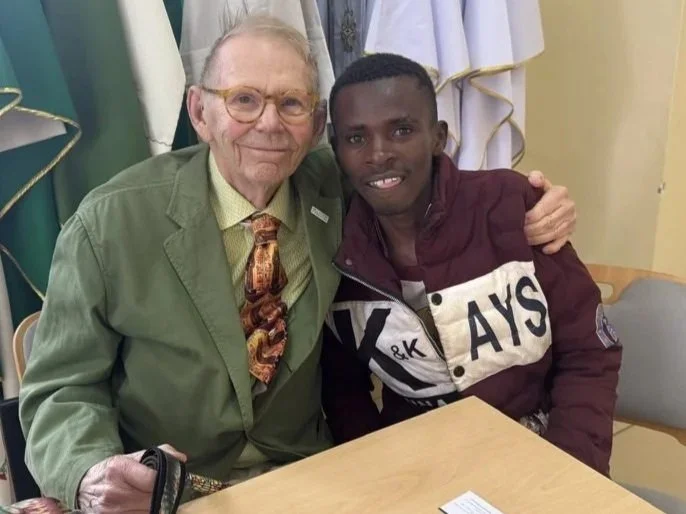
Bill with Julius, one of the young men the program has helped off the street.
I also met Jeff, a counselor at Mamma Africa whose dedication to these kids is complete. He gives everything he has, every day, finding boys on the street, walking them out of it, and staying with them for as long as it takes.
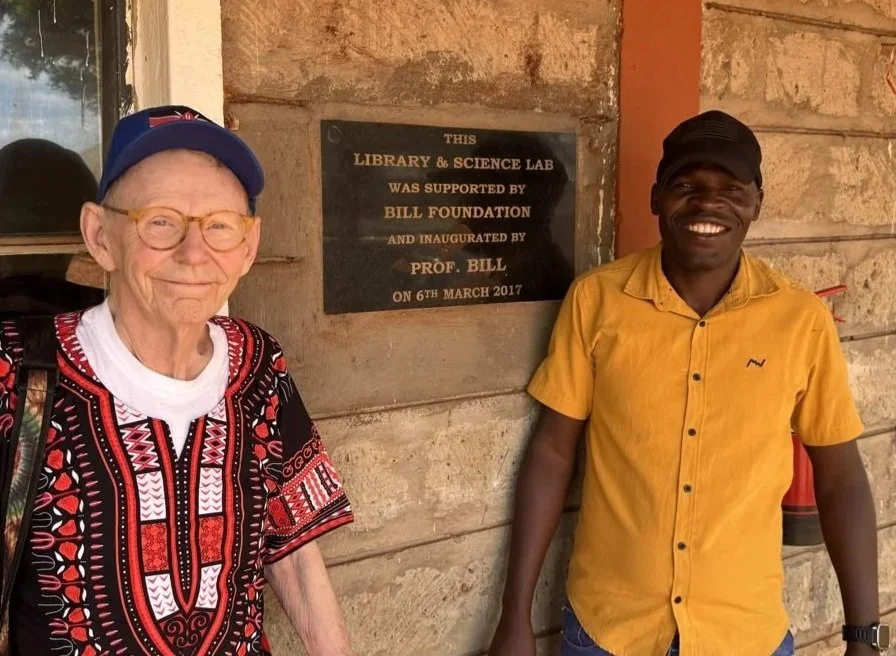
Jeff, a Mamma Africa counselor who gives everything to these children, with Bill.
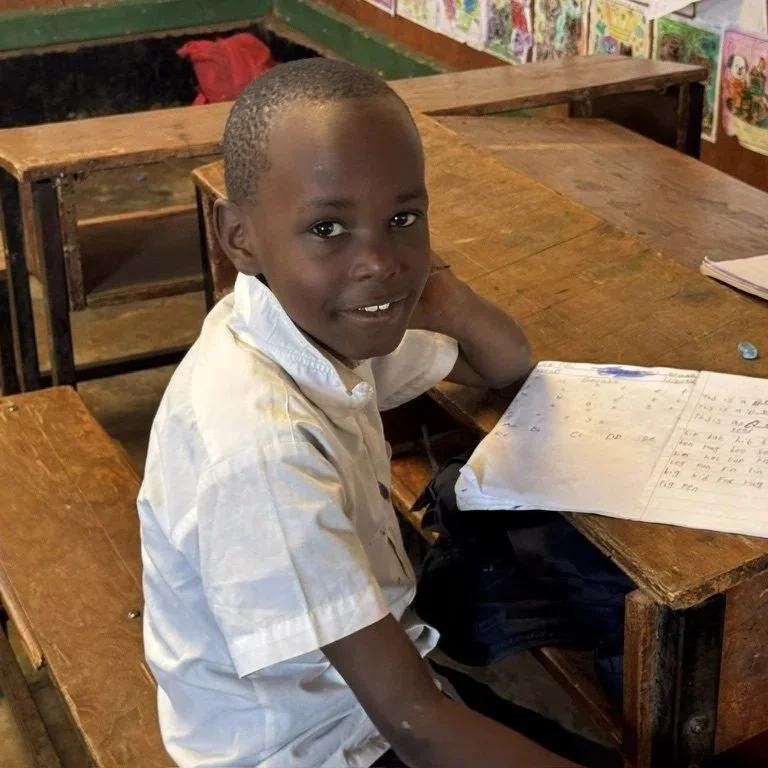
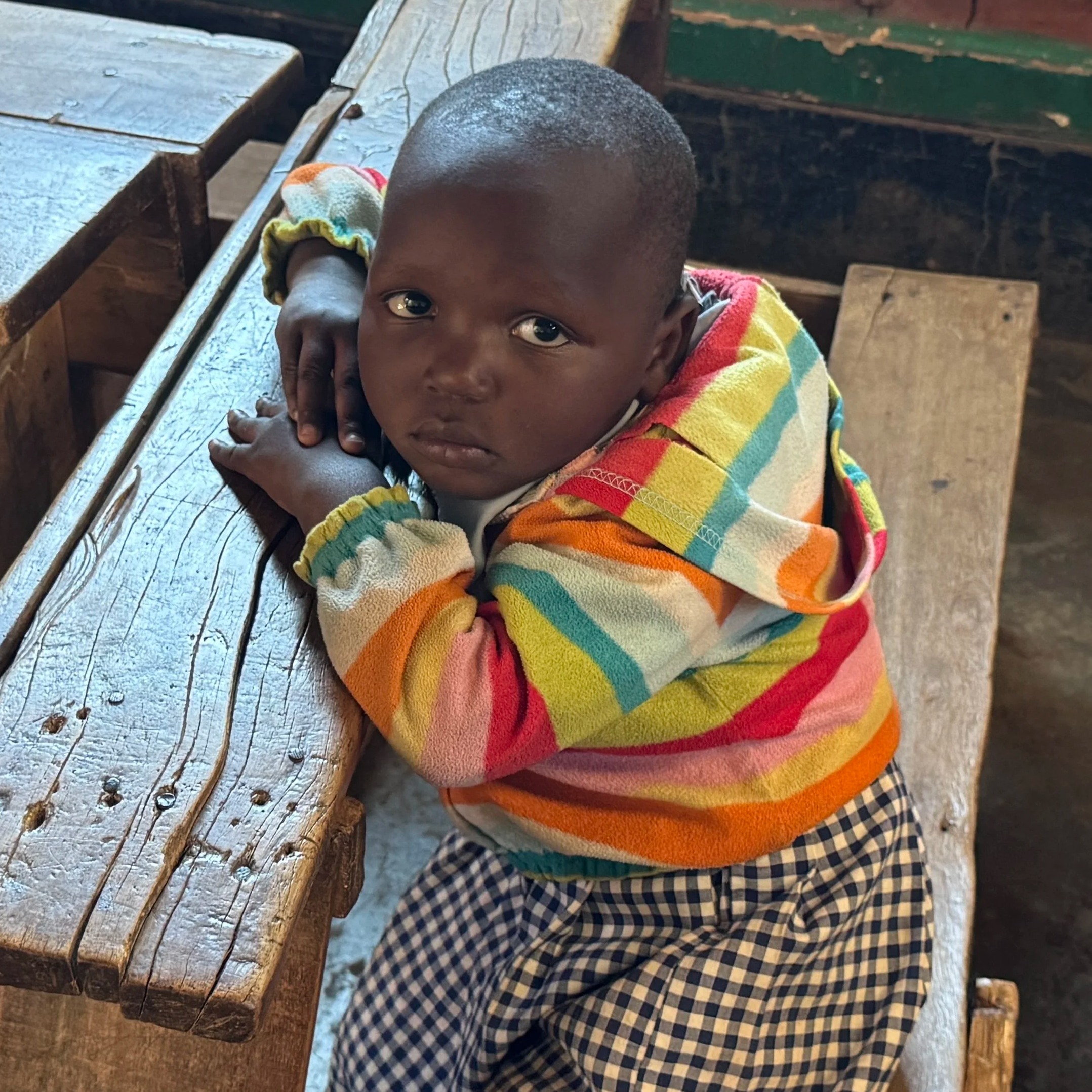
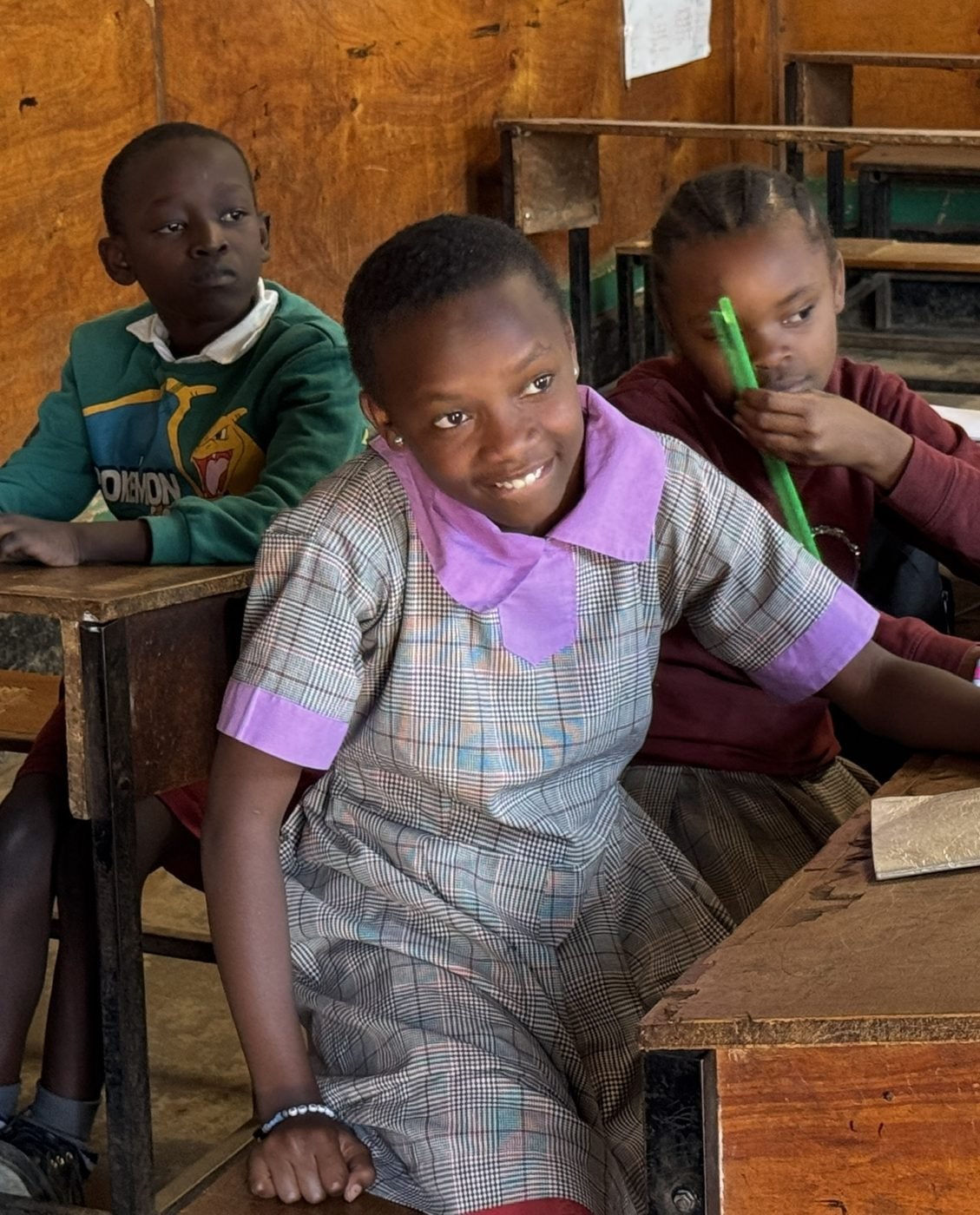
Students at Baraka Za Ibrahim.
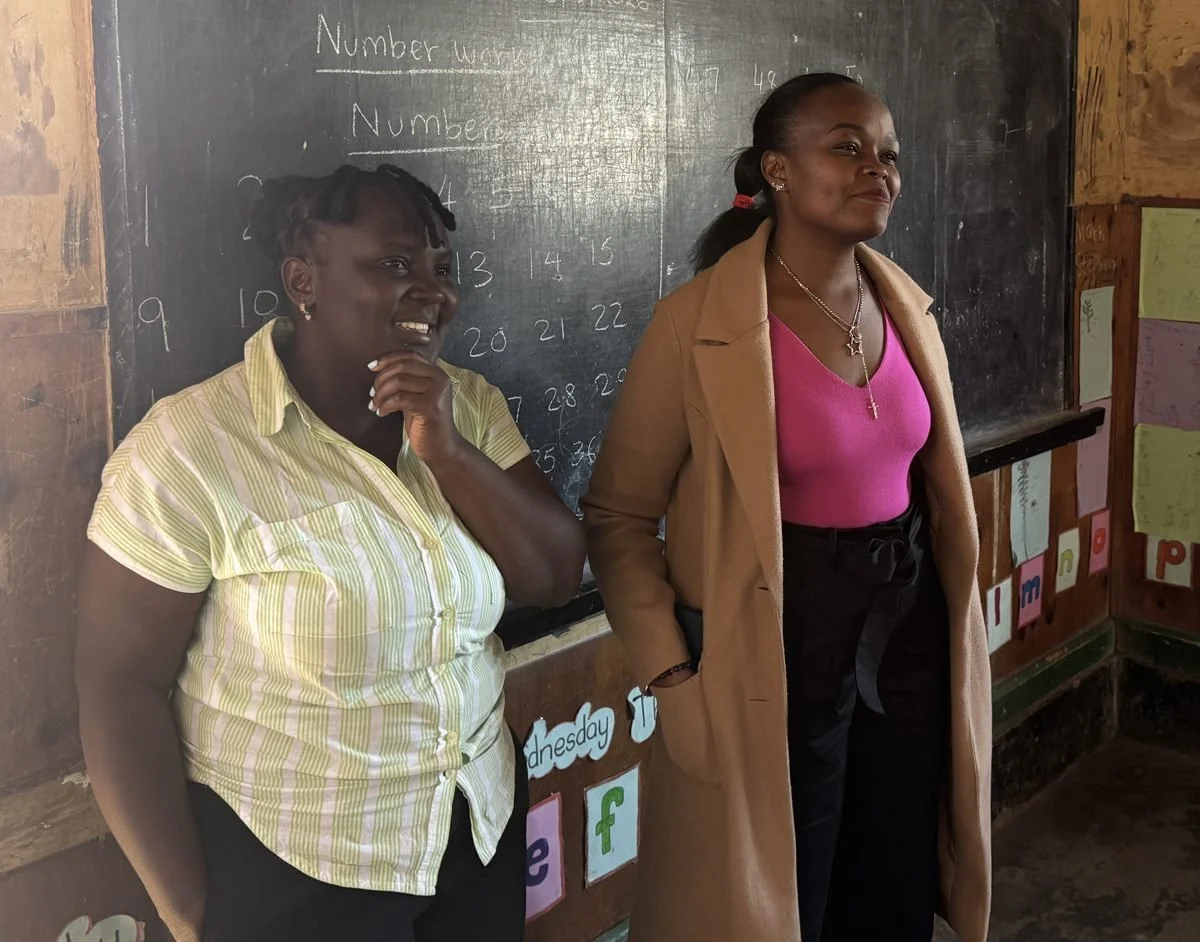
Maureen Mbithi (right) with a teacher at Baraka Za Ibrahim, Kibera — the school her grandmother started in 1988.
And I saw plainly where every dollar goes. I’ve always known this Foundation runs lean, with little or no overhead, the money going straight to the people who need it most. Seeing it in person made it real. I stood inside a library and a computer lab the Foundation built. I watched a single meal reach two hundred people. There is no distance here, and no wasted dollars.
And I came to better understand the people who make it work. The teachers, the counselors, the staff who are there day in and day out. They carry this from up close, and they need us from afar. Our steady, consistent support that makes the real difference. What you give becomes a teacher in a classroom, a child’s school fees, a meal on Sunday.
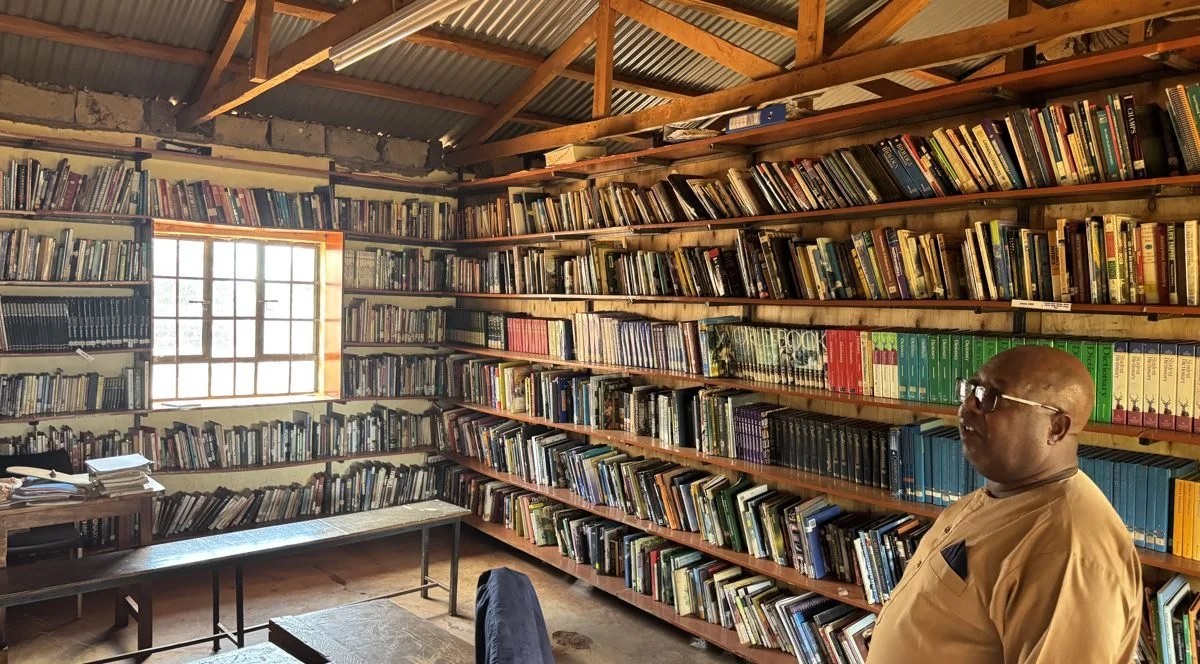
The library those gifts filled, with Father David among the shelves.
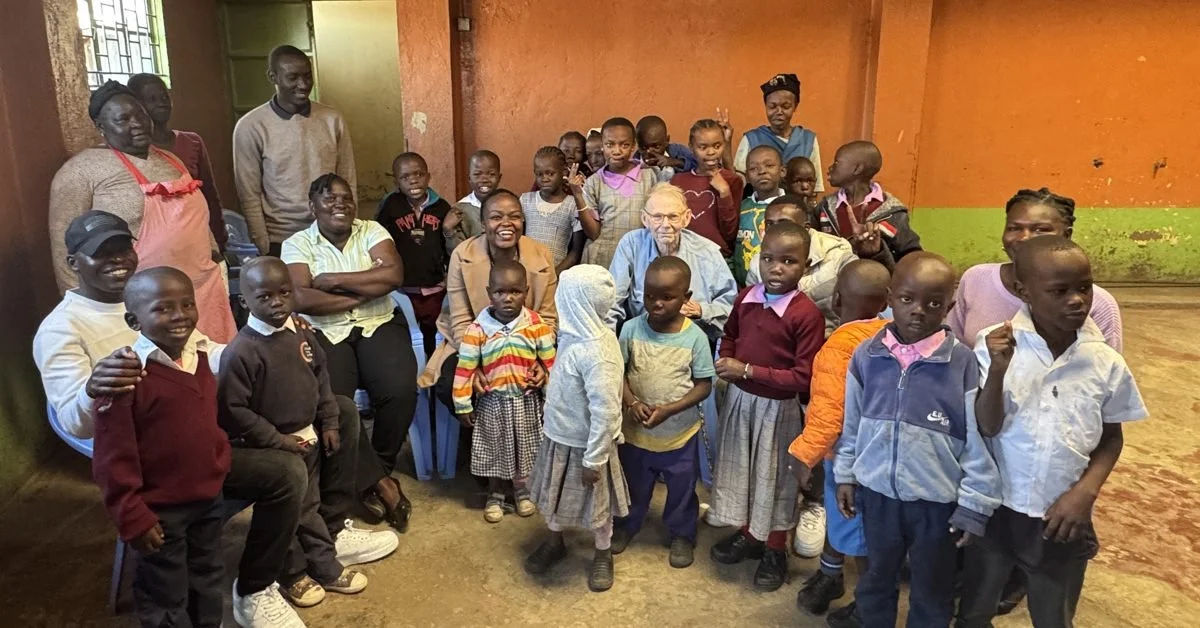
Bill and Maureen, surrounded by staff, teachers, and the children of Baraka Za Ibrahim.
This is the difference between sympathy and empathy that Bill has spent his life talking about, and it is exactly what your kindness has been building all along. Thank you for being part of it and for supporting children in Kenya and around the world.
With gratitude,
Charlie Cardillo
Board Member • Bill Cook Foundation
What’s needed now
Every gift reaches the ground. Here is what your donation helps buy right now:
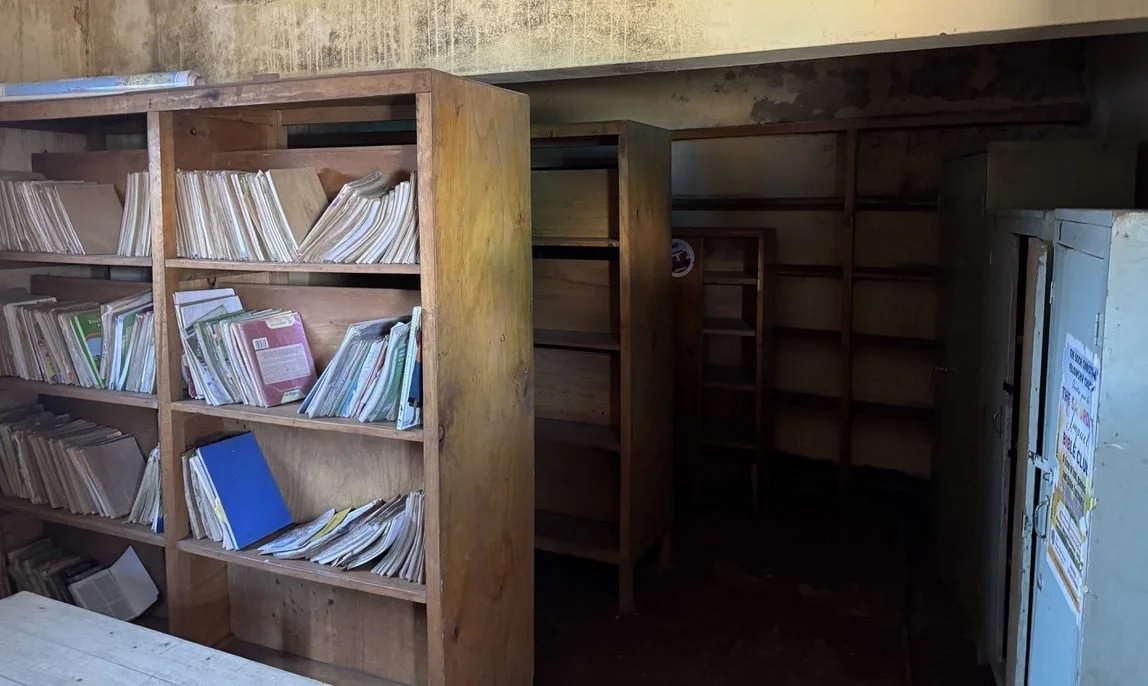
With your support, we can help fill these shelves for the children at Baraka Za Ibrahim.
Library books: To fill the empty shelves at Baraka Za Ibrahim in Kibera.
Teacher salaries: To keep good teachers in the classroom, the hardest and most important need.
New classrooms and buildings: Room to teach more children.
Tuition for a child: To carry a student through school, from the first lesson to graduation.
Propane stoves: To replace the wood-burning stoves that fill school kitchens with smoke.
Sunday meals: To keep the weekly feeding running for the neighborhood.